
In SEO, if you can't measure it, you can't improve it. Accurate SERP tracking is the bedrock of any successful strategy, providing the raw data needed to validate your efforts, spot competitor movements, and adapt to algorithm changes. The challenge isn't just about knowing your rank; it's about understanding the context, from local pack results and featured snippets to the visual layout of the page. Without precise, reliable data, SEO becomes a guessing game.
Choosing the right platform is critical. Some tools offer incredible speed for daily updates, others integrate rank tracking into a comprehensive all-in-one SEO suite, and a few are built specifically for handling enterprise-scale data across thousands of keywords. This guide cuts through the noise to deliver a detailed analysis of the 12 best SERP tracking tools available today. We move beyond marketing copy to explore their unique strengths, ideal use cases, and practical limitations. To further understand the strategic advantages, exploring the benefits of AI-powered search monitoring tools can provide deeper insights into the value of accurate rank tracking.
Our goal is to help you find the perfect tool for your specific needs, whether you're a developer automating visual SERP capture, an SEO specialist managing client campaigns, or a data scientist collecting web data. Each review includes core feature analysis, pricing, and honest pros and cons to help you make an informed decision. We will examine Semrush, Ahrefs, AccuRanker, and more, giving you the information needed to get clear, actionable insights from the ever-changing search landscape.
1. Semrush – Position Tracking
Semrush is more than a SERP tracker. With its position tracking tool, you can monitor where your website ranks for specific keywords and see how those rankings change over time. Track rankings across different locations and devices, compare your visibility with competitors, and see which SERP features your site appears in, all on one platform.
Core Features & Use Cases
- Daily rank tracking: Monitor keyword rankings and see when your positions move up or down.
- Competitor tracking: Compare your visibility with competitors and see where they are gaining ground.
- SERP feature tracking: See when your keywords trigger features such as featured snippets, AI Overviews, and local packs, and whether your site appears in them.
- Location and device tracking: Track search performance across different locations and devices, which is useful for businesses targeting customers in specific areas.
- AI Search visibility: Track how brands appear in AI-generated answers, including competitor visibility, sentiment, citations, and the prompts that trigger mentions.
Pricing & Ideal User
Pricing starts at $139/month. See current Semrush pricing here. Semrush is a good fit for businesses that need rank tracking alongside keyword research, competitor analysis, site audits, and AI visibility tracking.
Pros:
- Extensive search visibility tools beyond rank tracking.
- Daily ranking updates and detailed competitor comparisons.
- Tracks SERP features and visibility across different locations and devices.
Cons:
- May feel like more than you need if you're only looking for basic rank tracking.
- Some advanced features are available on higher-priced plans.
Website: https://www.semrush.com
2. Ahrefs – Rank Tracker
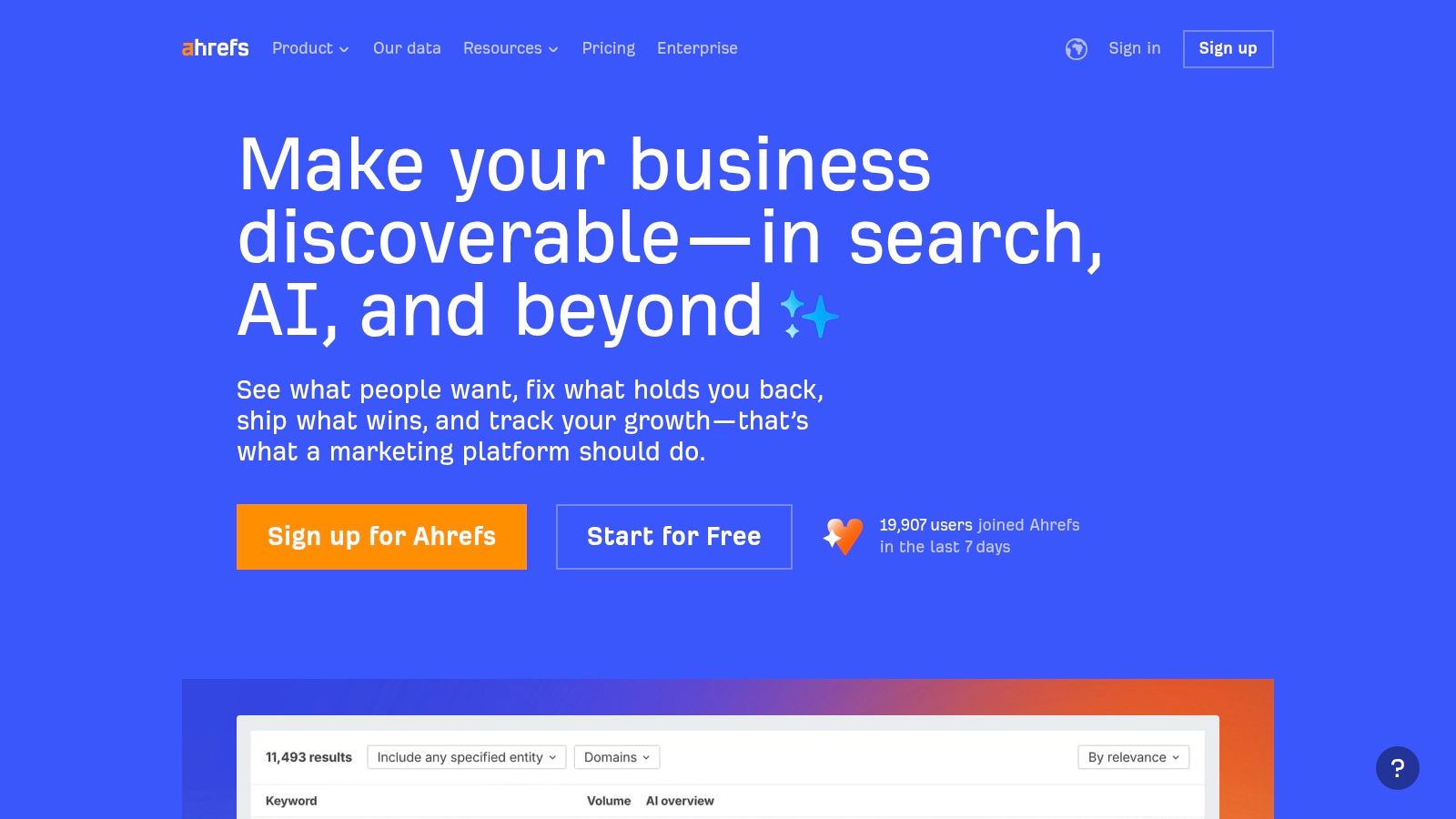
Ahrefs is a powerhouse in the SEO industry, and its Rank Tracker is a core part of its comprehensive suite. It earns its place on this list by combining reliable rank tracking with some of the most trusted backlink and keyword data available, presenting it all in a clean, user-friendly interface.
The platform provides a clear, historical view of your performance, allowing you to see not just where you rank today, but how you got there. Ahrefs excels at tracking your share of voice and average position across keyword segments, giving you a high-level overview of your SEO health at a glance. It’s one of the best SERP tracking tools for those who value data integrity and a seamless user experience.
Core Features & Use Cases
- SERP Feature Tracking: Ahrefs identifies your ownership of over a dozen SERP features, including featured snippets, people also ask, and top stories, helping you understand your full visibility.
- Historical Data & Competitor Views: You can easily track your ranking history against key competitors, providing essential context for performance shifts and strategic adjustments.
- Share of Voice Metrics: The platform calculates your traffic share from tracked keywords, showing how much of the potential organic traffic you are capturing versus your rivals. This helps you grasp the fundamentals of what SERP tracking is all about and its impact on market presence.
- Advanced Filtering & Tagging: Organize large keyword lists with robust tagging and filtering options to analyze performance for specific campaigns, product categories, or content types.
Pricing & Ideal User
Ahrefs' pricing starts with the Lite plan at $99/month, which includes weekly rank updates. To get daily updates, users need the Project Boost add-on. This model makes Ahrefs ideal for SEO professionals, content marketers, and agencies who already rely on its wider toolset for keyword research and competitive analysis and want a deeply integrated rank tracker.
Pros:
- Trusted data and mature toolset across SEO workflows.
- Clean UI and strong export/reporting capabilities.
- Excellent historical data visualization.
Cons:
- Daily tracking requires a paid add-on (Project Boost).
- Pricing can increase with usage-based limits and additional users.
Website: https://ahrefs.com
3. AccuRanker
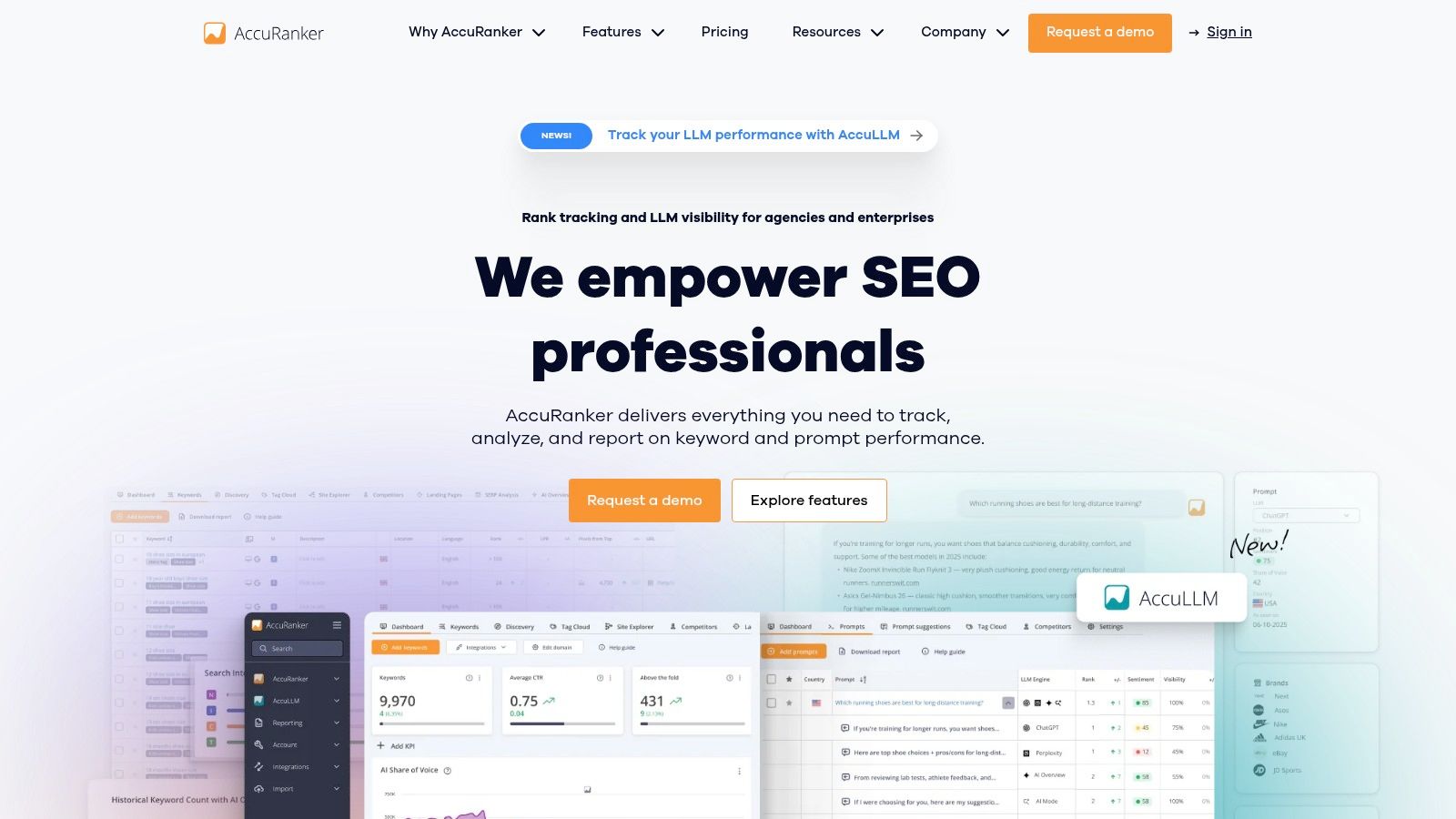
AccuRanker is a dedicated, high-speed rank tracker built for precision and scale. It carves out its niche by focusing purely on being the fastest, most accurate SERP tracker on the market. This singular focus makes it one of the best SERP tracking tools for agencies and in-house teams who need reliable, on-demand data without the overhead of a full marketing suite.
The platform's key differentiator is its speed and refresh capability. While most tools offer daily updates, AccuRanker provides them as a standard and allows users to refresh keyword rankings instantly at any time. This is invaluable for verifying algorithm updates, checking the impact of site changes, or reporting on highly volatile SERPs.
Core Features & Use Cases
- On-Demand Updates: Instantly refresh your keyword rankings at the click of a button, providing real-time data crucial for agile SEO strategies.
- Precise Local Tracking: Monitor SERPs with high granularity, down to specific city or zip code levels, making it ideal for local SEO campaigns and service-area businesses. Its performance as a SERP results checker at the local level is top-tier.
- Advanced Data Segmentation: Use powerful tagging and filtering to segment your keyword data by any metric imaginable, from SERP features to landing pages, for deep-dive analysis.
- Developer-Friendly API: AccuRanker offers a robust API and a native Looker Studio (formerly Google Data Studio) connector, allowing for seamless integration into custom dashboards and business intelligence workflows.
Pricing & Ideal User
AccuRanker’s pricing is based on the number of keywords tracked, starting at around $129/month for 1,000 keywords. This model scales effectively for large portfolios, making it a favorite among SEO agencies, enterprise-level businesses, and data-driven marketing teams that prioritize speed, accuracy, and integration capabilities above all else.
Pros:
- Blazing fast, with daily and on-demand keyword updates.
- Excellent local tracking capabilities and data segmentation.
- Strong API and native integration with Looker Studio.
Cons:
- Pricing can be higher than competitors for a smaller volume of keywords.
- It is a specialized tool; lacks the broader SEO features of an all-in-one suite.
Website: https://www.accuranker.com
4. STAT Search Analytics (by Moz)
STAT Search Analytics, now part of the Moz family, is an enterprise-grade SERP tracker built for handling immense volumes of data. Where other tools cater to general marketing teams, STAT is engineered specifically for large-scale SEO operations that need to monitor thousands, or even millions, of keywords daily. It is one of the best SERP tracking tools for gaining market-level insights from massive keyword sets.
The platform's strength lies in its raw power and data granularity. It doesn't just track ranks; it captures the entire SERP for every keyword, every day, across any location. This allows for deep analysis of market trends, share of voice across vast product categories, and identification of emerging competitors at a scale that is difficult for all-in-one suites to match.
Core Features & Use Cases
- Large-Scale Daily Tracking: Its core function is to provide fresh daily rank data for huge keyword lists, making it ideal for large e-commerce sites, multi-location enterprises, and major publishers.
- Complete SERP Archiving: STAT captures the full SERP for each tracked keyword, allowing you to analyze which SERP features (like People Also Ask, featured snippets, and video carousels) are present and who owns them.
- Local and Mobile Coverage: Track keywords with precision across different countries, cities, or even specific neighborhoods, with full segmentation between mobile and desktop results.
- Flexible API Access: A robust API allows for the integration of STAT's vast SERP data into custom business intelligence dashboards, data warehouses, and other internal tools for bespoke analysis.
Pricing & Ideal User
STAT's pricing is tailored for the enterprise market and is not publicly listed; it requires contacting their sales team for a custom quote. This structure, combined with its powerful feature set, makes it the ideal choice for large-scale SEO agencies and in-house enterprise SEO teams who need unparalleled data depth and are prepared for a significant investment.
Pros:
- Specifically built for very large keyword sets and deep market analysis.
- Exceptional data granularity with full SERP archiving.
- Strong support and dedicated onboarding for enterprise clients.
Cons:
- Pricing and onboarding are strictly enterprise-oriented.
- Not suitable for small businesses or teams with limited budgets.
Website: https://www.getstat.com
5. SE Ranking
SE Ranking positions itself as a powerful, all-in-one SEO platform with a focus on affordability and value. It’s an excellent choice for freelancers, small businesses, and agencies that need a robust SERP tracker without the enterprise-level price tag. The platform delivers reliable rank tracking alongside a full suite of supporting SEO tools, making it a highly practical option.
What sets SE Ranking apart is its transparent pricing and generous keyword limits, offering a comprehensive feature set that is accessible to a wider audience. You get daily rank updates, competitor analysis, and website auditing bundled into a clean, user-friendly interface. It successfully balances depth of features with ease of use, making it one of the best SERP tracking tools for those scaling their SEO efforts.
Core Features & Use Cases
- Accurate Daily Tracking: Monitor keyword rankings daily across major search engines, with precise targeting for specific countries, regions, or cities, and on both desktop and mobile devices.
- Comprehensive SEO Toolkit: Beyond SERP tracking, the platform includes a website audit tool, backlink checker, and keyword research capabilities, providing a holistic view of your SEO performance.
- SERP Competitor Analysis: Analyze the top 100 search results for any target keyword to understand the competitive landscape, identify content gaps, and discover ranking opportunities.
- Flexible Reporting & API: Offers white-label reporting options perfect for agencies and integrates with Looker Studio. API access is also available for custom dashboards and data warehousing.
Pricing & Ideal User
SE Ranking offers a highly scalable pricing model starting around $55/month, with costs based on the number of keywords tracked and the frequency of updates. This flexibility makes it ideal for SEO specialists, small to mid-sized agencies, and businesses with growing SEO needs that require a full toolset on a manageable budget.
Pros:
- Excellent value for money with generous keyword and project limits.
- User-friendly interface that is easy to navigate.
- Strong all-in-one feature set including site audits and backlink analysis.
Cons:
- The data depth and backlink index may not be as extensive as top-tier enterprise platforms.
- Some advanced features are only available on higher-priced plans.
Website: https://seranking.com
6. Wincher
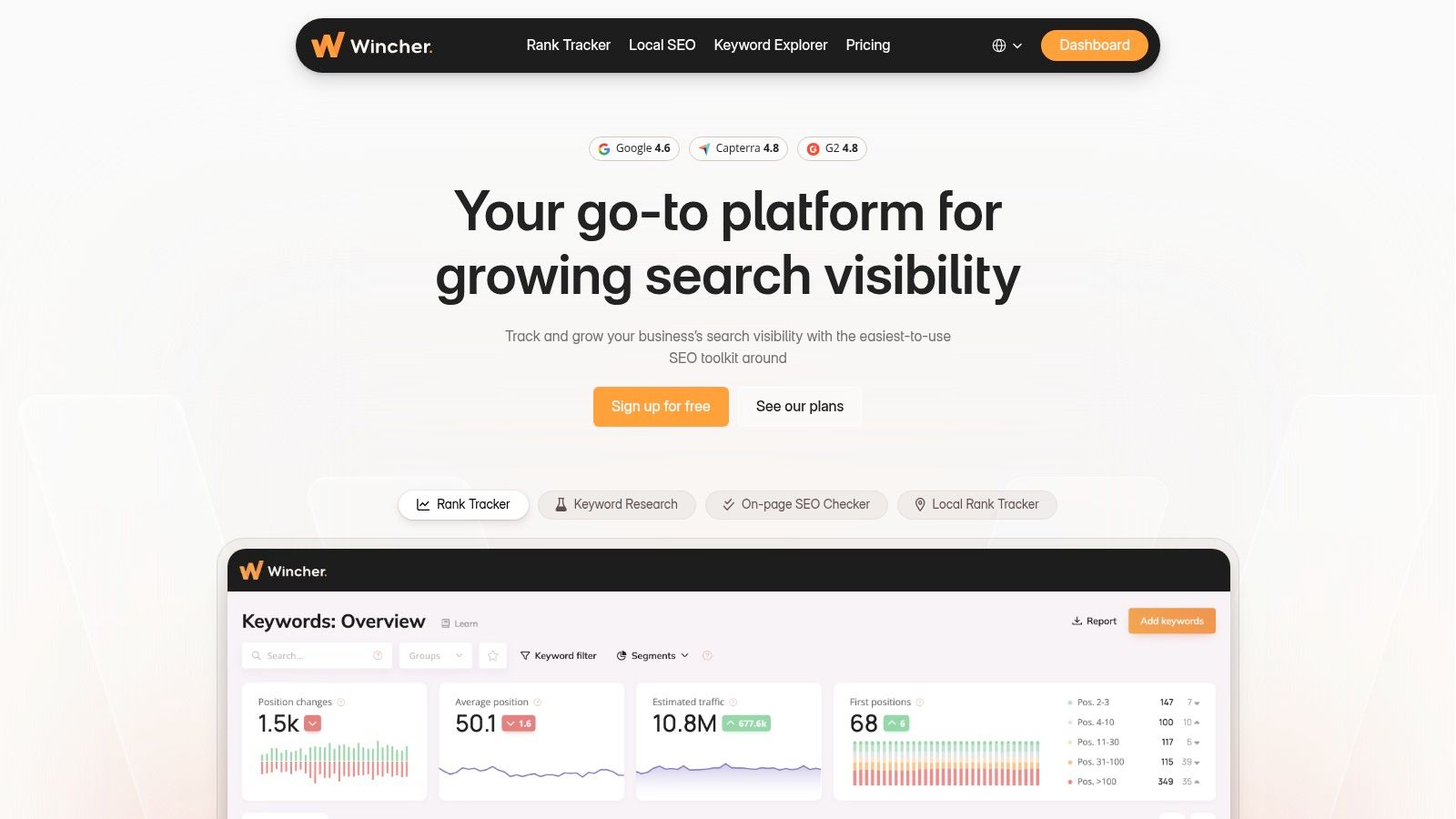
Wincher is a streamlined SERP tracker that prioritizes simplicity, accuracy, and affordability, making it an excellent choice for freelancers, small businesses, and agencies. It carves out its niche by offering core rank tracking functionalities with powerful reporting features, all within an intuitive user interface that avoids the complexity of larger, all-in-one SEO suites.
The platform is designed for users who need a dedicated tool to monitor keyword performance without a steep learning curve. Its inclusion of features like white-label reporting, a WordPress plugin for easy site integration, and on-page SEO suggestions provides significant value, positioning it as one of the best SERP tracking tools for those who need actionable data quickly.
Core Features & Use Cases
- Daily & On-Demand Updates: All plans include daily automatic rank updates, with higher-tier plans offering on-demand refreshes. This is perfect for checking the immediate impact of SEO changes.
- White-Label Reporting: Agencies can generate professional, unbranded PDF and CSV reports to share with clients. The integration with Looker Studio (Google Data Studio) allows for the creation of custom, interactive dashboards.
- Integrated SEO Tools: Wincher bundles a keyword research tool to find new opportunities and an on-page SEO checker to identify optimization areas for your tracked pages.
- WordPress Plugin: A unique feature that allows you to import keywords, track positions, and view performance data directly within your WordPress dashboard, simplifying workflow for website managers.
Pricing & Ideal User
Wincher’s pricing is highly competitive, with a Starter plan beginning around $39/month for 500 keywords. This accessible entry point makes it ideal for startups, bloggers, and small to mid-sized agencies. The fact that most plans support unlimited users makes it a cost-effective solution for growing teams that need a focused and efficient rank tracking platform.
Pros:
- Very competitive pricing and straightforward plans.
- Simple, clean user interface is easy to navigate.
- Unlimited users on most plans, great for agency collaboration.
Cons:
- Primarily focused on Google, lacking data from other search engines.
- Fewer advanced features compared to comprehensive SEO suites.
Website: https://www.wincher.com
7. ProRankTracker
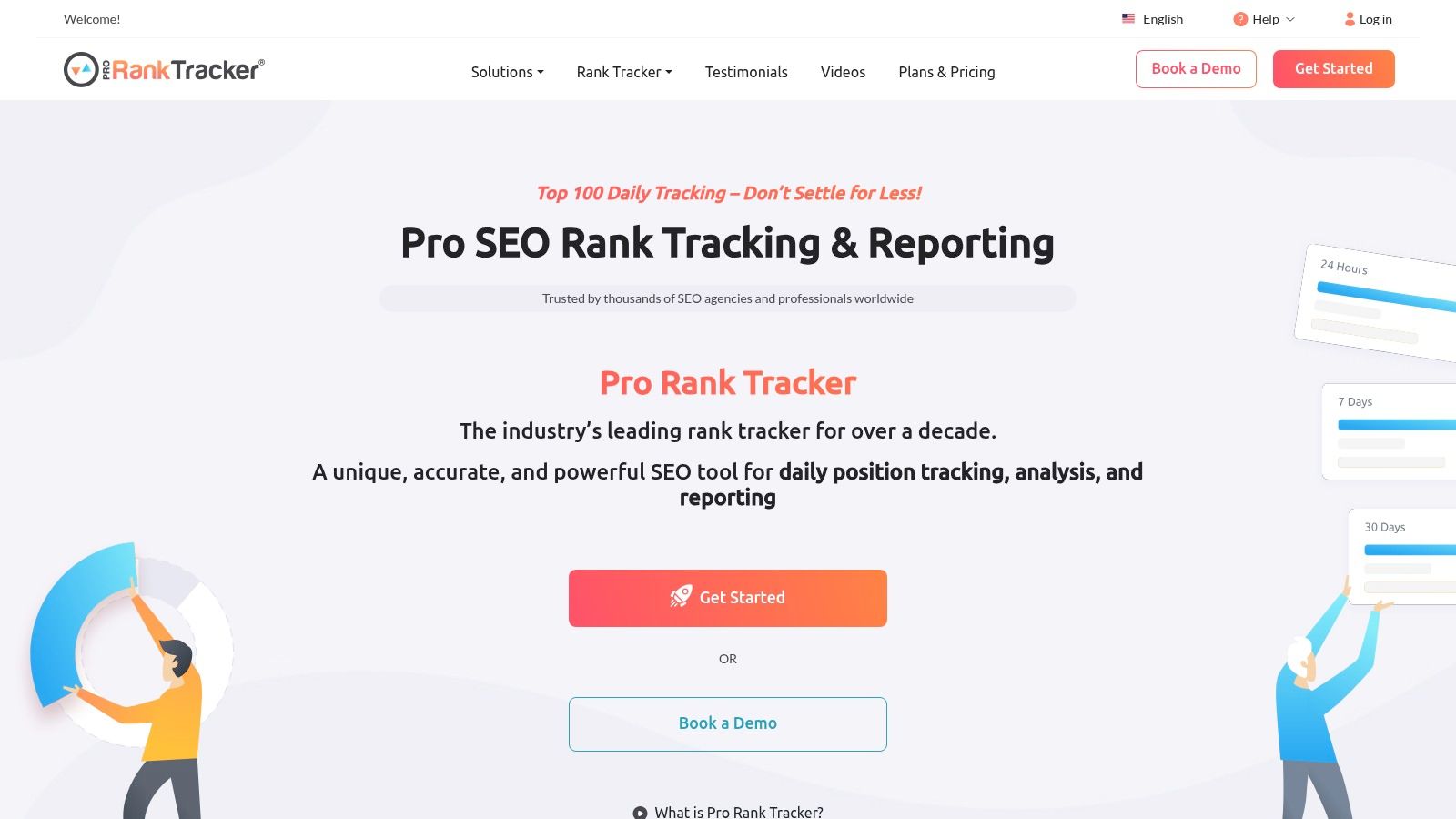
ProRankTracker is a dedicated SERP tracker that has carved out a niche by offering high-granularity tracking and exceptionally flexible, client-focused reporting features. It’s a workhorse tool designed for agencies and SEO professionals who need reliable, detailed rank data without the cost and complexity of a full marketing suite.
Where it truly shines is in its reporting and client management capabilities. It provides unlimited, customizable reports and even a white-label mobile app (MyRanks) that clients can use to view their ranking progress directly. This level of client-facing transparency makes it one of the best SERP tracking tools for agencies managing multiple accounts.
Core Features & Use Cases
- Granular Local & Mobile Tracking: Track rankings with high precision across all major search engines, including local results on Google Maps, mobile-specific SERPs, and even YouTube and Amazon.
- On-Demand Updates: While daily updates are standard, ProRankTracker offers "Update on Demand" credits. This is perfect for instantly checking ranks after implementing a major on-page change or before a client meeting.
- Unlimited Reporting & URLs: All paid plans allow you to track unlimited URLs and generate an unlimited number of reports. This is a significant advantage for agencies or consultants with a large and diverse client portfolio.
- Client-Centric Tools: The white-label MyRanks app and deep integration with Looker Studio (formerly Google Data Studio) provide professional and accessible ways to present ranking data to stakeholders.
Pricing & Ideal User
ProRankTracker’s plans are highly scalable, starting with the Starter plan at around $13.50/month for 100 tracked terms. The pricing model is very flexible, making it a cost-effective choice for freelancers, small businesses, and agencies who need robust tracking and reporting without paying for features they won’t use. Its true value emerges at mid-to-high keyword volumes.
Pros:
- Extremely flexible and scalable pricing plans.
- Excellent client-facing features like the MyRanks app.
- Unlimited reports and URLs are a major plus for agencies.
Cons:
- The user interface feels more utilitarian and less modern than some competitors.
- The variety of add-ons and tier choices can be complex to navigate initially.
Website: https://proranktracker.com
8. Nightwatch
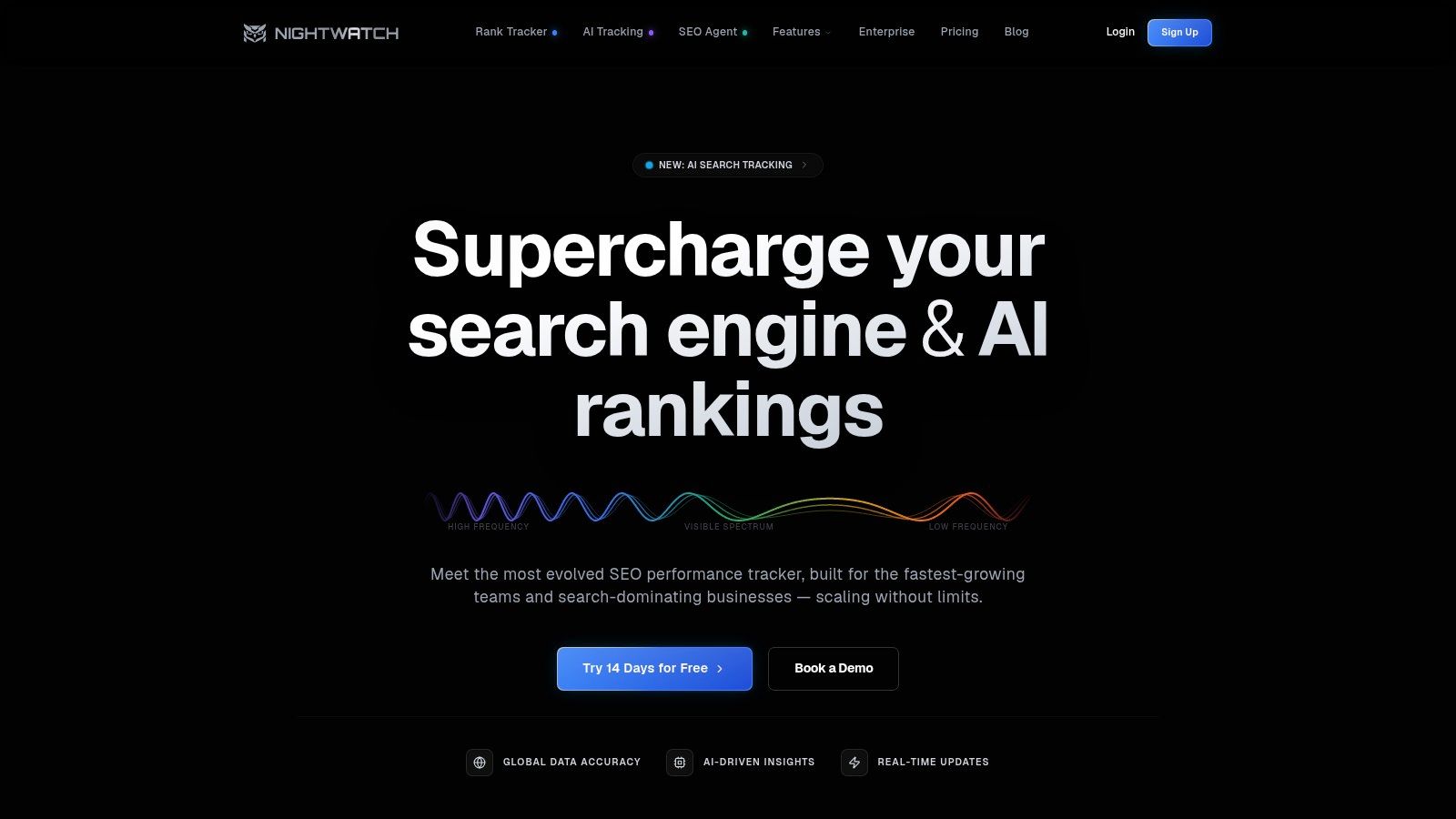
Nightwatch is a modern SERP tracker that stands out by looking to the future. While it provides robust, real-time tracking across major search engines like Google, Bing, and YouTube, its key differentiator is its proactive approach to monitoring the impact of generative AI on search results. It's a forward-thinking tool for teams who want to track traditional blue links and prepare for the new era of AI-driven SERPs.
The platform is designed for speed and global reach, offering daily updates with a real-time refresh option across an extensive network of over 100,000 specific locations. This precision is invaluable for agencies and businesses that need immediate feedback on their SEO efforts and visibility changes.
Core Features & Use Cases
- AI/LLM Overview Tracking: A unique, forward-looking add-on that specifically monitors your visibility within Google’s generative AI overviews. This is essential for understanding performance in the evolving SERP landscape.
- Real-Time Data Refresh: While daily updates are standard, users can manually trigger a data refresh for immediate insights, which is perfect for verifying changes after a site update or reacting to algorithm shifts.
- Unlimited White-Label Reporting: Agencies can generate an unlimited number of custom-branded reports for clients, a feature that often comes with strict limits or higher costs on other platforms.
- Broad Integrations: Connects seamlessly with Looker Studio, Google Analytics, and Google Search Console to create comprehensive dashboards that combine rank data with traffic and user behavior metrics.
Pricing & Ideal User
Nightwatch offers several tiers, starting with the "Startup" plan at around $32/month (billed annually) for 500 keywords. This makes it accessible to small businesses and freelancers. Larger plans scale up for agencies and enterprises. Its unique AI tracking capabilities make it one of the best SERP tracking tools for future-focused SEOs, agencies managing diverse client portfolios, and marketing teams who need to report on next-gen search visibility.
Pros:
- Pioneering AI/LLM overview monitoring to stay ahead of SERP changes.
- Real-time refresh capability is excellent for reactive SEO teams.
- Strong focus on agency-friendly features like unlimited white-label reports and API access.
Cons:
- The innovative AI tracking feature is a paid add-on, not included in base plans.
- Keyword limits on the entry-level plan might be restrictive for users with larger sites.
Website: https://nightwatch.io
9. Mangools – SERPWatcher
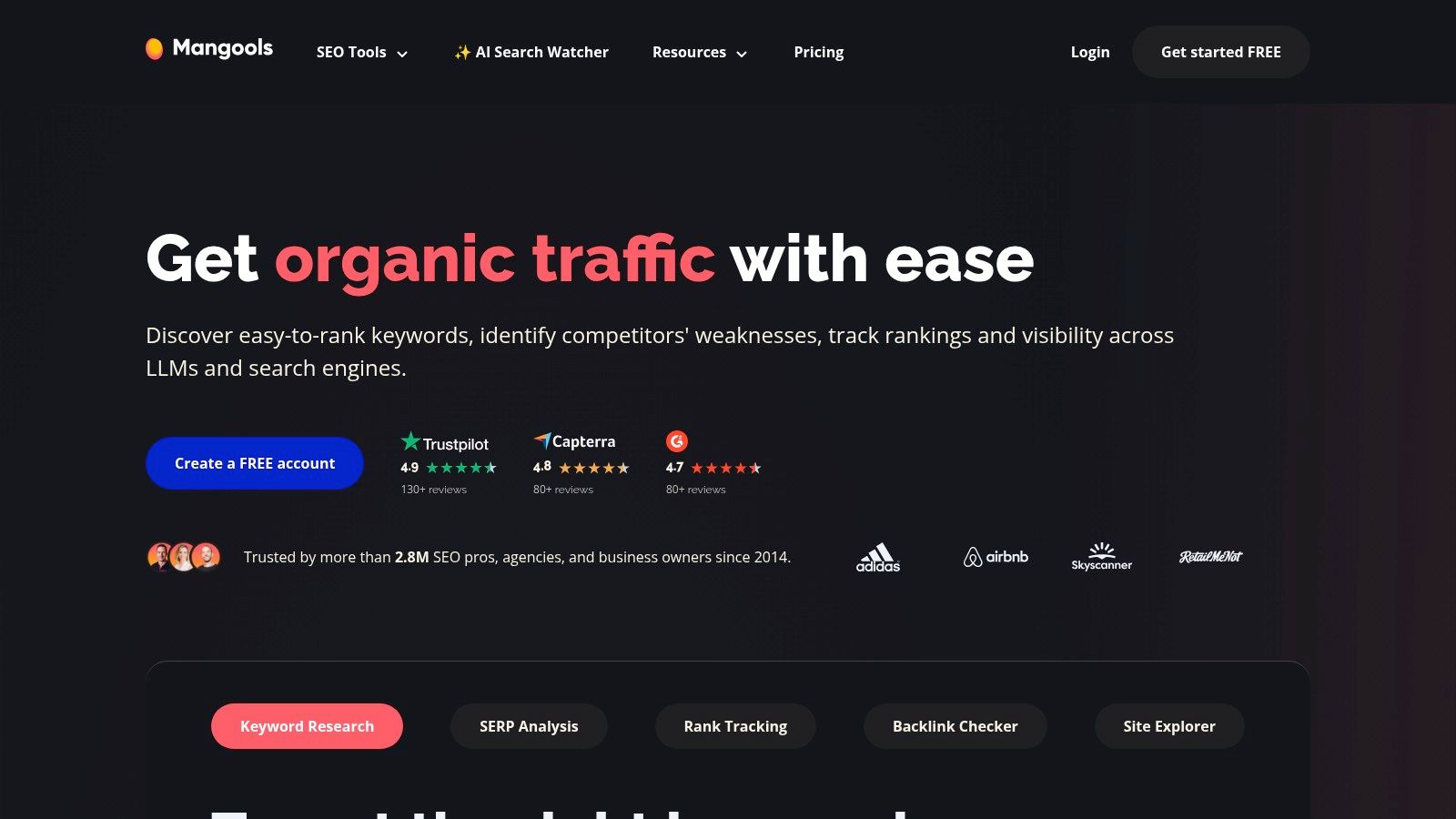
Mangools offers a suite of accessible SEO tools, with SERPWatcher serving as its straightforward and effective rank tracking component. It carves out its place on this list by bundling essential SEO functionalities into a single, affordable package, making it one of the best SERP tracking tools for freelancers, bloggers, and small businesses who need more than just rank data without the enterprise-level price tag.
The platform's core strength is its simplicity and value. Instead of overwhelming users with complex metrics, SERPWatcher presents daily rank updates, a performance index, and visibility scores in a clean, easily digestible interface. This focus on user experience makes it incredibly easy to get started and monitor campaign progress without a steep learning curve.
Core Features & Use Cases
- Daily Rank Updates: Keywords are tracked on a daily basis, providing timely feedback on your SEO efforts across both desktop and mobile devices.
- Performance Index: SERPWatcher calculates a single, easy-to-understand metric based on your current keyword positions and their search volumes, giving you a quick overview of your site's organic visibility.
- Bundled SEO Toolkit: A subscription includes access to KWFinder (keyword research), SERPChecker (SERP analysis), LinkMiner (backlink analysis), and SiteProfiler (website metrics), offering a complete workflow for SEO campaigns.
- Interactive & Shareable Reports: Generate clean, interactive reports that can be easily shared with clients or team members via a link, streamlining communication.
Pricing & Ideal User
Mangools is known for its budget-friendly pricing, with plans starting around $49/month (often cheaper with annual billing). This makes it an ideal choice for solo SEOs, content creators, and small marketing teams who need a reliable daily tracker and a solid set of supporting research tools without a major financial commitment.
Pros:
- Excellent price-to-value ratio, bundling five tools in one subscription.
- Extremely user-friendly interface that is perfect for beginners.
- Reliable daily tracking with a helpful performance index score.
Cons:
- Lacks the advanced competitive analysis and deep data features of enterprise tools.
- Keyword tracking limits on lower-tier plans can be restrictive for larger sites.
Website: https://mangools.com
10. Rank Ranger (Similarweb)
Rank Ranger, now part of the Similarweb suite, offers a powerful combination of classic rank tracking with extensive market intelligence. It stands out by connecting SERP performance data directly to broader digital marketing insights, making it one of the best SERP tracking tools for teams that need to understand how rankings influence overall market share and traffic.
The platform's strength is this integration. You aren’t just looking at keyword positions in a vacuum; you’re analyzing them alongside competitive traffic estimates and audience behavior data pulled from Similarweb, providing a much richer strategic context than most standalone trackers.
Core Features & Use Cases
- Multi-Engine Tracking: Monitor keyword rankings not just on Google, but also on Bing, YouTube, and other search engines, providing a more holistic view of your search visibility.
- Advanced SEO Reporting: Build highly customizable, white-label reports and dashboards that integrate rank data with analytics and other key performance indicators, perfect for agency-client communication.
- Market Intelligence Context: Leverage Similarweb's data to understand the traffic potential behind your target keywords and analyze how your SERP visibility stacks up against competitors' overall digital footprint.
- Historical Data Analysis: Access and analyze historical ranking data to identify long-term trends, measure the impact of algorithm updates, and evaluate the success of past SEO campaigns.
Pricing & Ideal User
Rank Ranger's pricing is geared toward the enterprise and agency market, often requiring a custom quote after a sales consultation. The cost reflects its position as part of a premium digital intelligence platform. This makes it ideal for large in-house SEO teams, competitive intelligence analysts, and marketing agencies that require deep, integrated data sets for strategic decision-making and comprehensive client reporting.
Pros:
- Powerful bundle for teams needing market and traffic context alongside rankings.
- Enterprise-level integrations and deep reporting capabilities.
- Comprehensive tracking across multiple search engines.
Cons:
- Pricing transparency is limited and often requires contacting sales.
- Some users reported transition or growing pains after the acquisition by Similarweb.
Website: https://www.rankranger.com
11. SISTRIX
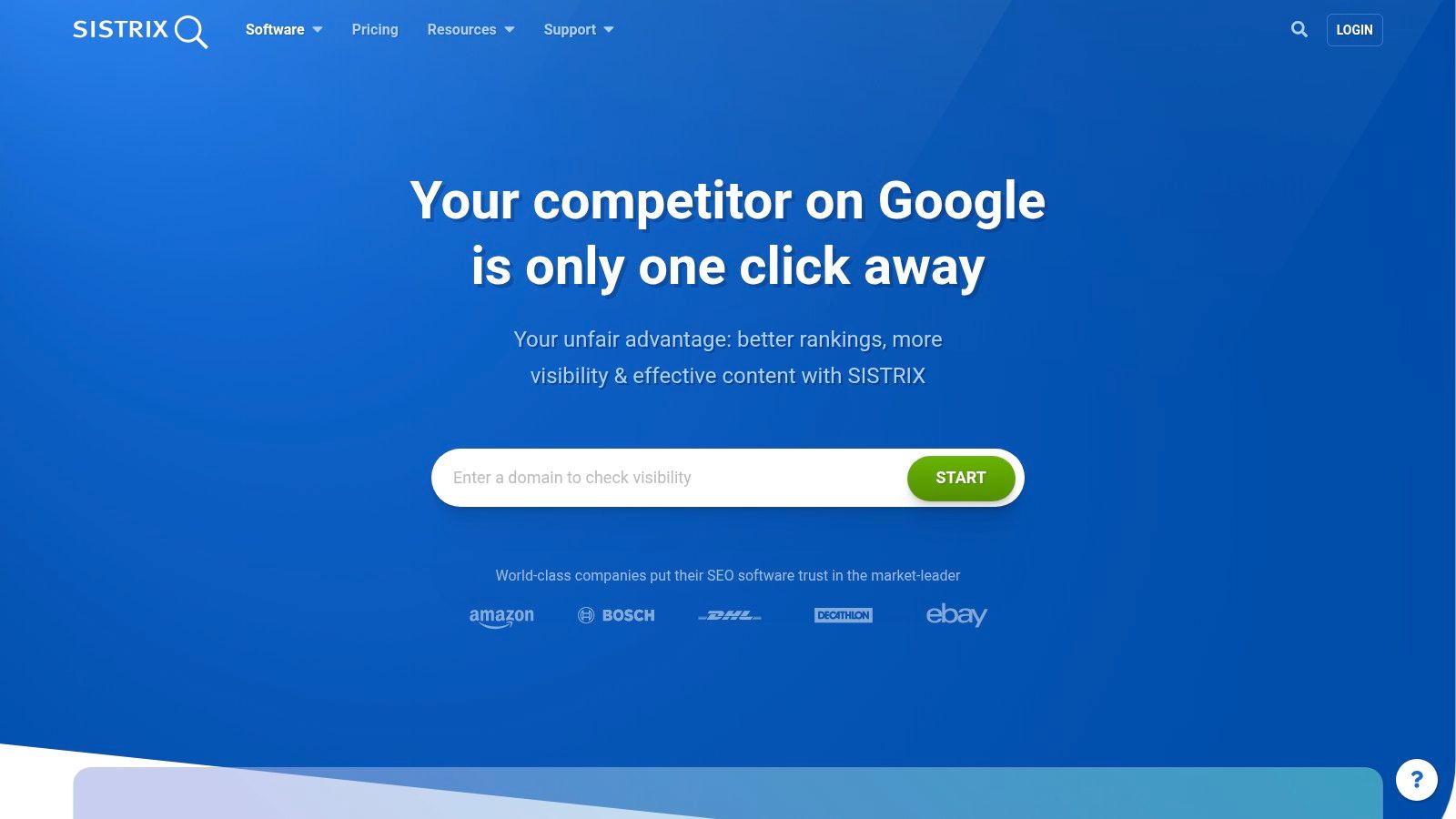
SISTRIX is a highly respected European SEO suite known for its proprietary "Visibility Index," a metric that provides an at-a-glance performance score for any domain. While it's a comprehensive platform, its SERP tracking is a core function, valued for its extensive historical data and robust competitor benchmarking capabilities, making it a reliable choice for long-term SEO strategy analysis.
The platform distinguishes itself with a clean interface and a focus on actionable, easy-to-digest data visualizations. Instead of just listing rank changes, SISTRIX frames performance within the context of overall market visibility, helping teams understand not just where they rank, but how much SERP real estate they truly command against their rivals. This makes it one of the best SERP tracking tools for agencies and consultants who need to produce clear, impactful client reports.
Core Features & Use Cases
- Visibility Index: Use this unique metric to benchmark your domain's overall organic search performance against competitors over time. It's excellent for high-level reporting and spotting significant market shifts.
- Historical Data: Access vast historical ranking data, with some plans going back over a decade. This is invaluable for analyzing the long-term impact of algorithm updates or a competitor's SEO history.
- Project-Based Tracking: Organize your keywords into dedicated projects to monitor specific campaigns or website sections. Track positions, SERP features, and visibility trends on a daily or weekly basis.
- Competitor Analysis: Easily compare your keyword rankings and overall visibility directly against key competitors within the platform, identifying opportunities where they are weak and you can gain ground.
Pricing & Ideal User
SISTRIX offers tiered plans, starting with the "Start" package at €99/month. Its pricing structure is straightforward, with higher tiers unlocking more projects, keywords, and deeper historical data. It's an excellent fit for SEO agencies, in-house marketing teams, and data-driven consultants, particularly those with a focus on European markets or those who value long-term performance analysis.
Pros:
- Reliable Visibility Index provides a clear, consistent performance metric.
- Strong European databases with comprehensive global coverage.
- Extensive historical data is a key differentiator.
Cons:
- Pricing is displayed in EUR, which can be a consideration for US buyers due to exchange rates.
- The most advanced features and deeper data access are reserved for higher-cost plans.
Website: https://www.sistrix.com
12. Google Search Console (Performance report)
While not a traditional SERP tracker, Google Search Console (GSC) is an indispensable, foundational tool for any SEO strategy. It offers authoritative, first-party data directly from Google on how your site performs in search results. It’s the ultimate source of truth for clicks, impressions, and click-through rates, making it one of the best SERP tracking tools to use as a baseline to validate data from third-party platforms.
GSC’s strength lies in its simplicity and accuracy. The Performance report reveals the actual queries users typed to find your site, along with the average position of your URLs for those terms. This is crucial for discovering new keyword opportunities and understanding user intent directly from the source, without any estimation or scraping involved.
Core Features & Use Cases
- Performance Reports: Analyze clicks, impressions, CTR, and average position filtered by queries, pages, countries, and devices. This is essential for diagnosing performance drops or identifying high-potential pages.
- Data Integration: GSC connects seamlessly with Google Analytics and Looker Studio, allowing you to blend search performance data with on-site user behavior for a more holistic view.
- URL Inspection & Indexing: Use the URL Inspection tool to understand how Google sees a specific page, check its index status, and request indexing.
- Email Alerts: Receive notifications for critical site issues, such as indexing problems or manual actions, allowing for rapid response.
Pricing & Ideal User
Google Search Console is completely free. It is a non-negotiable tool for literally everyone with a website: from individual bloggers and small business owners to enterprise-level SEOs and marketing agencies. It serves as the fundamental dataset that all other SEO activities should be measured against.
Pros:
- Completely free and provides authoritative source-of-truth data.
- Essential baseline for validating other SEO tools and strategies.
- Direct integration with other key Google products like Analytics.
Cons:
- Not a true rank tracker; data is sampled and positions are averaged.
- Data retention is limited to the last 16 months.
Website: https://search.google.com/search-console
Top 12 SERP Tracking Tools — Feature & Performance Comparison
| Product | Core features | Quality (★) | Price / Value (💰) | Target (👥) | Standout (✨🏆) |
|---|---|---|---|---|---|
| Semrush – Position Tracking | Daily rank tracking, competitor & SERP feature tracking, AI search visibility | ★★★★ | 💰 From $139/mo; modular add‑ons | 👥 Teams & agencies | ✨ All‑in‑one SEO + reporting |
| Ahrefs – Rank Tracker | Rank history, SERP feature tracking, large index, exports | ★★★★★ | 💰 Premium; usage scales price | 👥 Agencies & SEOs needing backlinks | ✨ Trusted data index 🏆 |
| AccuRanker | Daily & on‑demand updates, precise local, robust APIs | ★★★★★ | 💰 Agency/enterprise pricing; transparent quotas | 👥 Agencies & large teams | ✨ Speed & dev‑friendly APIs 🏆 |
| STAT Search Analytics (Moz) | Daily at scale, competitive intelligence, API | ★★★★★ | 💰 Enterprise pricing (contact sales) | 👥 Enterprises & market analysts | ✨ Built for massive keyword sets 🏆 |
| SE Ranking | Daily top‑100 tracking, audits, backlinks, API | ★★★★ | 💰 Affordable tiers; transparent plans | 👥 SMBs & budget teams | ✨ Strong price‑to‑value |
| Wincher | Daily tracking, white‑label reports, WP plugin | ★★★ | 💰 Competitive/variable regional pricing | 👥 Small agencies & freelancers | ✨ Simple UI + unlimited users |
| ProRankTracker | Local/mobile granularity, unlimited reports, client app | ★★★★ | 💰 Flexible mid‑range plans | 👥 Agencies with client reporting | ✨ Client apps & unlimited reports |
| Nightwatch | Real‑time refresh, GA/GSC integrations, AI add‑on | ★★★★ | 💰 Mid‑to‑enterprise; AI add‑on extra | 👥 Teams tracking AI/LLM visibility | ✨ AI/LLM SERP monitoring |
| Mangools – SERPWatcher | Daily tracking, bundled KWFinder/LinkMiner tools | ★★★ | 💰 Budget‑friendly; annual discounts | 👥 Freelancers & small teams | ✨ Beginner‑friendly toolkit |
| Rank Ranger (Similarweb) | Rank tracking + market/traffic insights, advanced reports | ★★★★ | 💰 Enterprise contact pricing | 👥 Teams needing market context | ✨ Combined rank + Similarweb data |
| SISTRIX | Project tracking, Visibility Index, long historical data | ★★★★ | 💰 Mid‑to‑high (EUR pricing) | 👥 Enterprises & EU‑focused SEOs | ✨ Visibility Index & historical depth |
| Google Search Console (Performance) | Queries/pages/devices, URL inspection, Core Web Vitals | ★★★ | 💰 Free | 👥 All teams (baseline data) | ✨ First‑party Google data 🏆 |
Choosing Your Tool and Capturing the Proof
Navigating the landscape of the best SERP tracking tools can feel overwhelming, but the journey to finding the right fit is about matching capability to context. We've explored a dozen powerful options, from comprehensive SEO suites like Semrush and Ahrefs to specialized, high-velocity trackers like AccuRanker and enterprise-grade analytics platforms like STAT Search Analytics. Your final decision hinges on a clear understanding of your team's specific needs, operational scale, and strategic priorities.
Choosing the right tool is the critical first step, but it’s only half the battle. Raw ranking data provides the "what," but it often misses the crucial "why" and "how." The actual, visual SERP is a dynamic and complex environment, filled with features like Featured Snippets, People Also Ask boxes, Knowledge Panels, and local packs that directly impact user behavior and click-through rates. A simple number-one ranking doesn't tell the full story if it’s buried beneath a mountain of SERP features. This is where data validation and visual evidence become non-negotiable.
From Data Points to Definitive Proof
Ultimately, the goal isn't just to track keyword positions; it's to understand and influence what your audience sees. This requires a two-pronged approach: quantitative data from your chosen SERP tracker and qualitative, visual proof of the SERP itself.
- For Agencies and Consultants: When you present a report to a client, showing a screenshot of their result ranking prominently in a local map pack is infinitely more powerful than just showing a "Position 3" in a spreadsheet. It makes the results tangible and demonstrates clear value.
- For In-House SEOs: When building a business case for a new content strategy, you can use archived SERP screenshots to show how competitors are winning Featured Snippets over time. This visual timeline provides undeniable evidence and strengthens your strategic recommendations.
- For Developers and QA Teams: Automating visual regression testing of SERPs ensures that changes to your site's structured data are rendering correctly in search results. Capturing these results programmatically provides a reliable quality gate.
This is precisely where a screenshot API like ScreenshotEngine becomes an indispensable part of your SEO toolkit. By integrating it with your workflow, you can programmatically capture high-fidelity, pixel-perfect images of the exact SERPs your primary tool is analyzing. This allows you to validate your data, archive historical SERP layouts, and build compelling reports that leave no room for ambiguity. Combining one of the best SERP tracking tools for data collection with a robust API for visual capture creates a complete, undeniable record of your SEO performance.
Making Your Final Selection
So, how do you make the final call? If you're a solopreneur or small business looking for an all-in-one solution with an excellent balance of features and affordability, platforms like SE Ranking and Mangools offer incredible value. For a deeper dive into how these two popular SERP tracking tools stack up against each other, you might find this detailed comparison of Mangools vs Semrush helpful. Conversely, if your organization demands granular, high-frequency data across massive keyword sets, the investment in a specialized tool like AccuRanker or STAT will pay significant dividends.
Don't just choose a tool; build a system. Select your core data provider based on your budget and feature requirements, then augment it with a visual layer to capture the ground truth. This comprehensive approach empowers you to move beyond simple rank tracking and into true SERP intelligence, ensuring your strategies are built on a foundation of accurate data and irrefutable visual proof. Your future self will thank you for it.
Ready to add that crucial layer of visual proof to your SEO workflow? ScreenshotEngine provides a powerful, reliable API to programmatically capture clean screenshots of any SERP, giving you the undeniable evidence needed to validate data and build compelling reports. Start capturing the proof today with ScreenshotEngine.